Category Archives: Uncategorized

RIP Les Watts

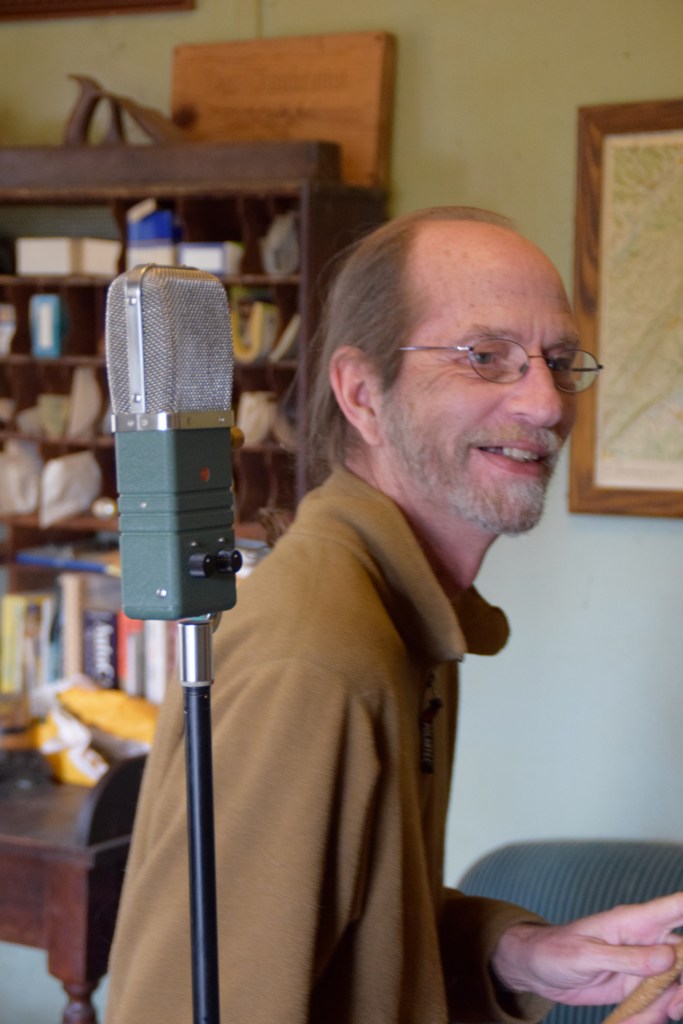
I met Les Watts quite a few years ago now, while I was living in Chattanooga. He posted some stuff on the Micbuilders list, where I had lurked around looking for info about ribbon mics. Les was an engineer… he worked at Shure and did design work on the M97 cartridge, he had a bunch of patents, he designed and built the Polyribbon microphone. He was really, really smart, especially in terms of acoustics, electrical engineering, mic design, etc. But he had zero common sense… for example, most rational people would understand that smoking twelve hand-rolled cigarettes a day isn’t good for you, even if it is from organic tobacco that you raised yourself.

I drove over to visit him a few times in Tiger, GA. He had been married at one time, but was a complete bachelor when I knew him. His house was a wreck. But his machine shop was amazing, and he did some incredible work there.
[c]Brian Gilbert bgilbertsound@gmail

He would call me occasionally. During these calls, he would talk- A LOT- about himself. About all the things he was going to do, about the patents he’d created, and how I was going to be his “marketing manager.” I knew enough to recognize that he was not somebody that you could depend on, and I DID NOT want to get entangled in any sort of business relationship with him. In the end, none of his grandiose business schemes ever materialized… at least while I knew him.

But… I remember very vividly the day when a large package arrived from Les. In it was a Polyribbon microphone. Les always talked a good story, but his follow-through was weak to say the least. He’d told me on numerous occasions about how he was going to send me a polyribbon, and about how it was the best-performing mic ever built. But I never expected that he’d actually send me one. But here it was, and it was absolutely beautiful. And it sounded beautiful too… except it didn’t have the rear rejection that I was expecting. You see, a polyribbon can be switched for different pickup patterns… bidirectional, cardioid, and omni. The old RCA 77DX had selectable pickup patterns as well, but the performance varied widely. Les’s design was different, in that it had a smooth high end response to 16k in all pickup positions, and the output was higher as well. Except for my mic, which was one of the first he’d built (in the end, he only built four mics. Two he sold to a guy in Saudi Arabia, one he had for himself, and I had one of the earliest ones.) This mic sounded fabulous in bidirectional mode, but the other two pickup patterns weren’t operational.

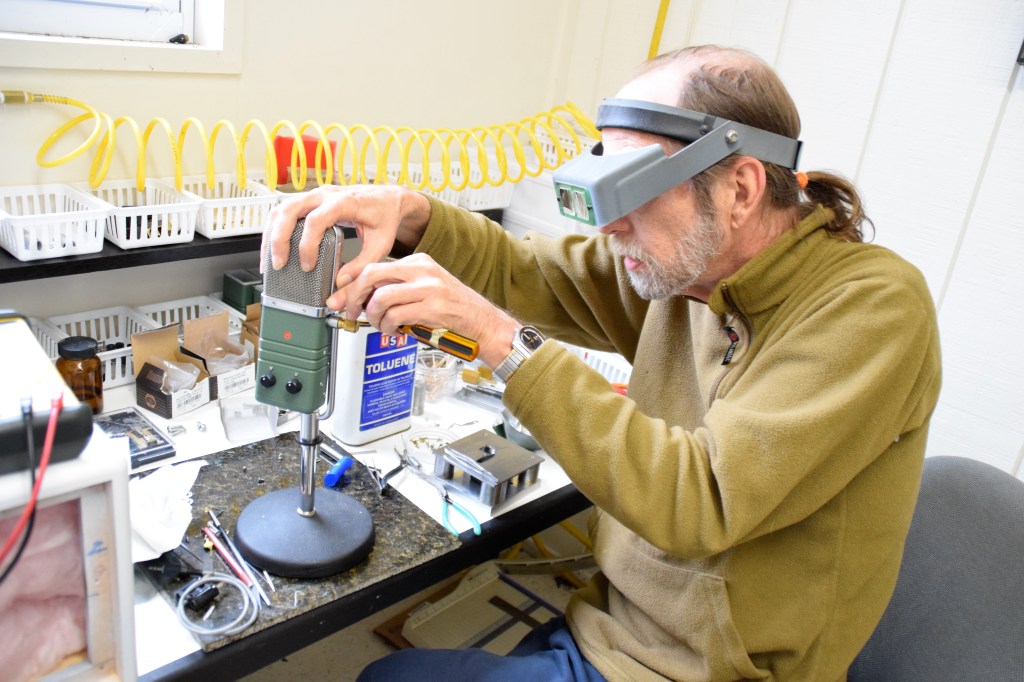
I drove the mic back to his place so he could have a look. He determined that it had been dropped during shipping, and one of the two ribbons became improperly tensioned. I watched him repair the mic… and that’s when I realized that, as good as it was, this mic would be impossible to reproduce at any sort of scale, It was just too touchy & required a good bit of luck to function properly. I remember that he got it to work, and carefully closed it up.
[c]Brian Gilbert bgilbertsound@gmail

I still have this mic. I rarely bring it out of its custom case. It’s stored vertically, as a ribbon mic should be. I’ve used this on a handful of music jobs, but I don’t dare to use it unless a project warrants it.

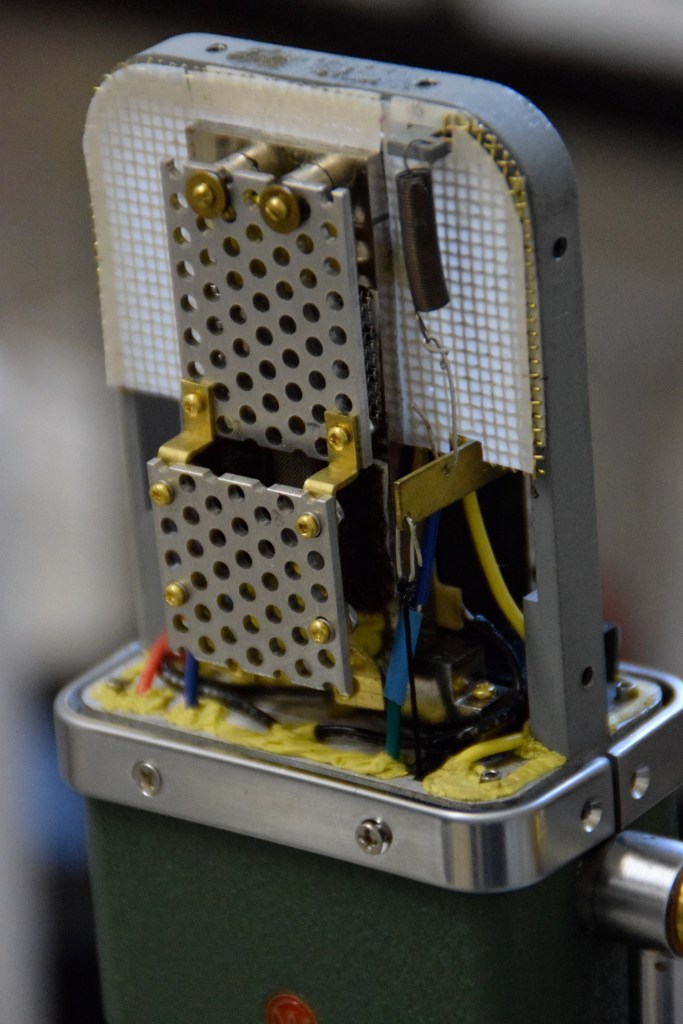
And now that Les has passed away, I’m not likely to use it again unless Bonnie Raitt or Allison Krauss calls me up looking for it… and they don’t know me from Adam, so I don’t expect this mic will see much use. The ribbons in any ribbon mic are extremely fragile, and blowing into one is enough force to destroy it. And this mic uses two ribbons with a center clamp, differently tensioned. It really is an amazing piece of engineering artistry, and proved that he had the technical chops to back up his long-winded stories.
[c]Brian Gilbert bgilbertsound@gmail

In all honesty, Les was a giant pain in the ass to deal with. He’d call and I’d be lucky to get five words out of my mouth during a hour long conversation. But for all his faults (and they were many and considerable) I miss him terribly. Maybe it’s because during our long talks, he treated me as though I was an equal. I wasn’t anything close to an equal, and admitted as much on numerous occasions. But it didn’t matter to Les. He was far and away more intelligent than I ever will be, and I guess in that sense he was kinda fun to talk to. But you’ll never meet a more stubborn, obstinate, dumbass genius no matter how far and wide you search. Even so, I wish he’d call me up again, with his great plans to start another mic company.

I hope he’s found his rest.

More SPFX work… The Walking Dead

Here’s a few photos of some work I did some years back for The Walking Dead. I spent about 3 months living out of a hotel and commuting to Senoia GA to work for Matt “Smalls” Kutcher and SpectrumFX way back in 2022. According to IMDB, my work appeared of four episodes during the final season. A large part of the job involved welding a large steel tank that would be used during the basement flood scene… basically there was a big rainstorm, a basement flooded, and zombies lurched out of the murky water to grab children. They’re already dead, right? So they can’t drown… anyway, We basically built a very large, steel, rectangular above-ground swimming pool, complete with a (very expensive) custom vinyl liner. The thinking was that it’s a permanent feature at Stalwart Productions, available for rent.

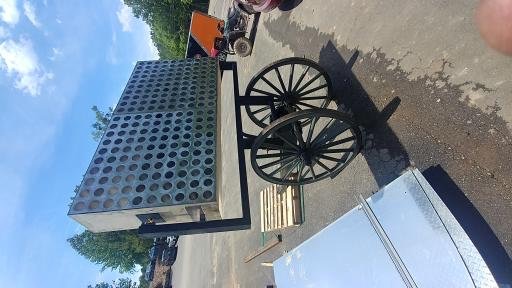
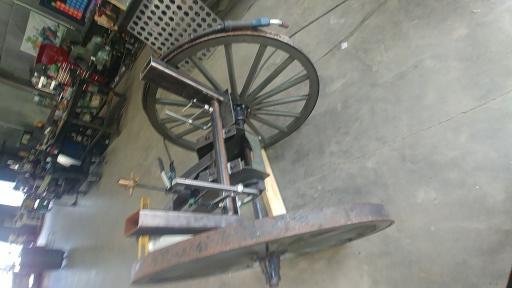
Once that was built, I was brought back up to the main shop to work on a number of smaller gags. The biggest deal was the “hwatcha,” which was a DaVinci-esque rocket launcher that was built onto a repro civil war cannon carriage. I built the base, the other guys built the box and tube assembly that went on top. Of course, production took one look and wanted it doubled in size, so we delivered. But the finished gag was dangerously overweight… I had to put warning notes all over the carriage saying “Do Not Lift Above 12 Inches” or the whole thing would unbalance and fall over. I was in charge of rigging the lull to lift it on to the roof of the set. Fortunately there were no problems with the lift, but I remember being very nervous.

All things considered, it was a great gig and I really enjoyed my time at SpectrumFX, though the three months living in a hotel was rather miserable since I was really missing my wife and doggie. But it was a good experience, I learned a lot, and wouldn’t hesitate to work for them again.

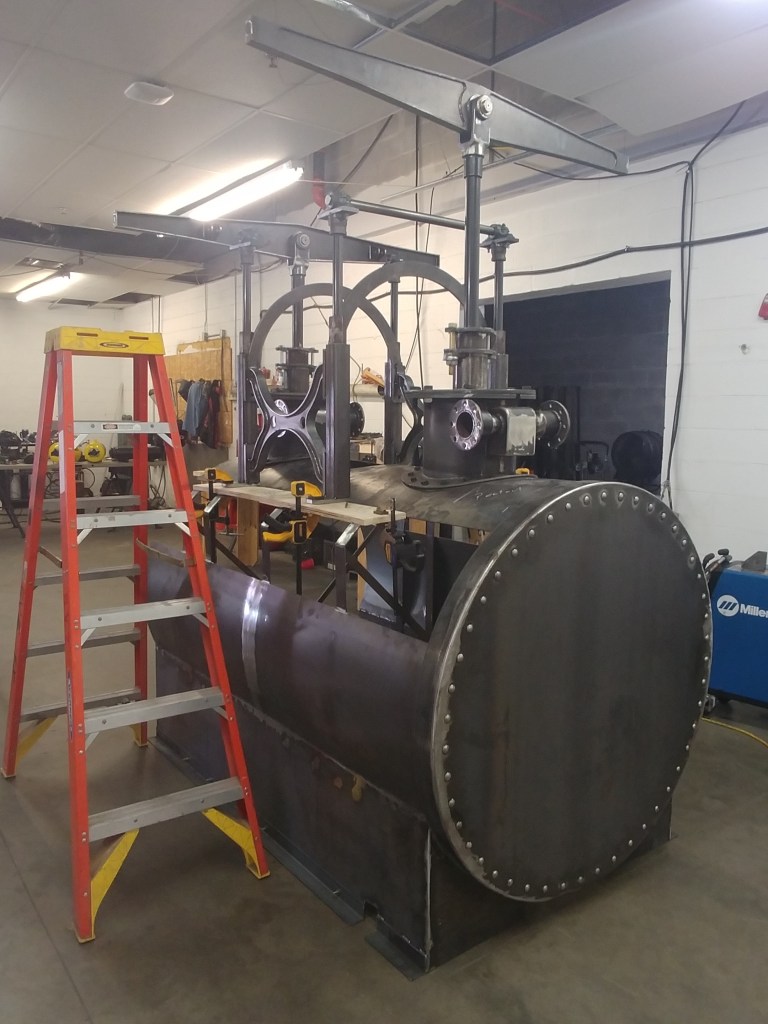
The water tank nearly done, with the liner in place. A lot of the parts had been fabricated at the SpectrumFX shop in New Orleans.
The SPFX shop on the walking dead set was a large metal building with two roll-up doors at either end.
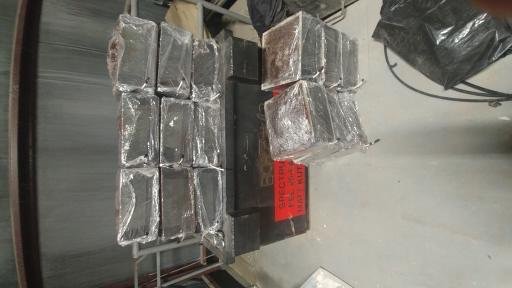
These are “party packs” that I helped make up. They are made from coils of det chord, with peat moss and movie dust encased in boxes of homosote and wrapped in stretch film. They fit onto specific launchers. When you light them off, they make an impressive explosion.
This is the “hwatcha” that we built. I made the yoke-like structure that holds the box. You can see where it’s twice as large as originally designed, and as a result, very overweight.
The “hwatcha” under construction. I pretty much designed it as I went along.
The finished “hwatcha” after it came back from the paint shop. All things considered, it turned out pretty good.
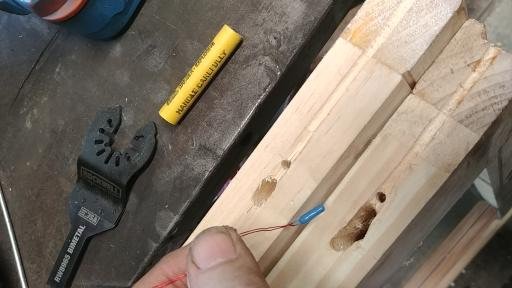
This was a fun little side project. I’m holding a detonator in my hand, which was buried inside a window frame. The idea was that the small charge would dramatically shatter the window glass during the take as a tree branch blew through it during the storm scene. I wasn’t present for the shooting, but the word was it worked as designed.
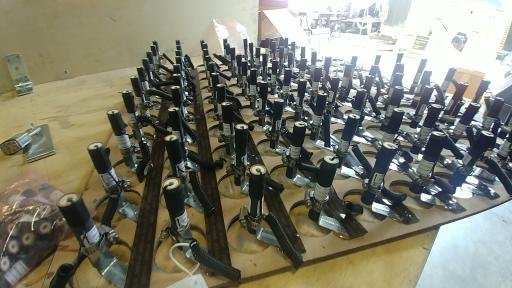
This was a big job… wiring the “hwatcha.” Each one of the 200 tubes had a “5×10” wired in it, meaning it would throw a five-foot trail of sparks for ten feet (or something like that… I can’t remember the correct numbers). The rockets that were supposed to come out of the tubes were CGI. Wiring these things took two full days, if I remember correctly.
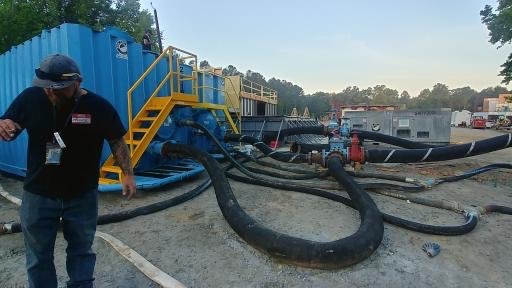
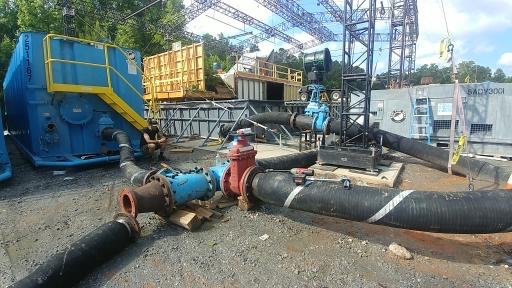
This was a HUGE job… plumbing the giant pool with equally giant water tanks and pumps. Since the water would get quickly cloudy, they wanted to be able to flush the tank with fresh, clear water quickly, as well as adjust the level of the water depending on the demands of the scene. This required huge pumps and hoses that were rented for the job. Incredibly- and to me, unbelievably- the system pretty much worked. I didn’t have anything to do with setting this up, but I was part of the team that operated it during shooting.
Lifting the “hwatcha” on to the roof for shooting. I was in charge of rigging this thing. For most SPFX techs this is no big deal, but I was nervous as a new dad until this thing was safely set up in its shooting position.
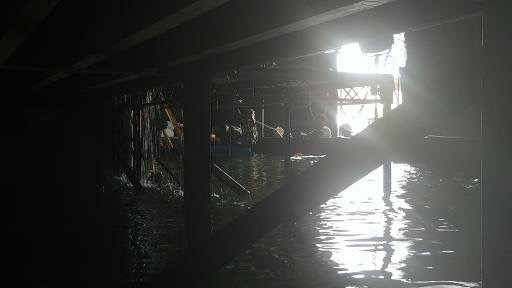
One of the only shots that I have of the water tank in operation. I wasn’t really supposed to be there while they were shooting.
This was a nightmare of a job… tearing down the whole assembly after the shoot so all the bits and pieces could be returned. Since I wasn’t around for the setup, this involved a lot of guesswork, and almost everyone ran for home after the final shot- leaving only myself and one or two people to clean up the mess. Fortunately Scotty was still there, who really took charge and told me what to do, and we got the job done in the end.

Special Effects Work- Underground Railroad

Awhile back I was hired to work in Savannah on the Amazon series Underground Railroad. Specifically I was a Special Effects Welder and Technician. It was supposed to be a six week project, but turned into five months- and it was loads of fun. The coordinator was Bruno VanZeeBroeck, who has a very impressive resume… one of his early credits was for Return of the Jedi. I wasn’t allowed to post anything about it at the time, which is standard procedure these days, but this show has long since aired.

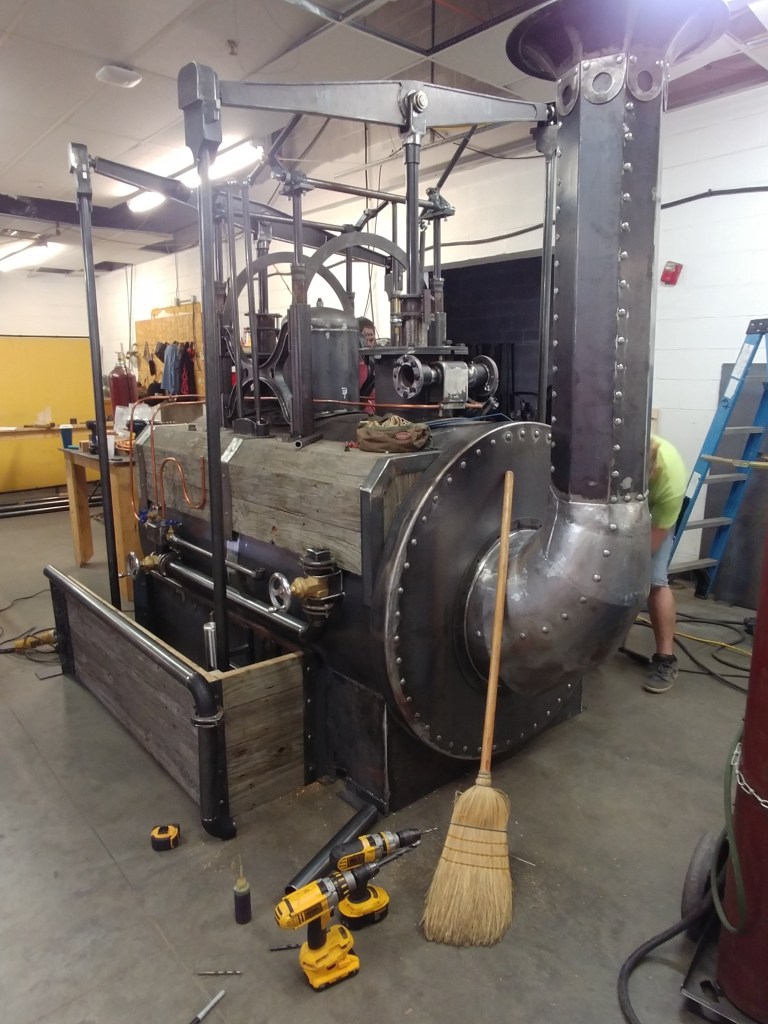
Our main project was to replicate a steam train by building a steel and wood “jacket” that fit over a small diesel switcher at the Savannah RR Museum. It was fully articulated, with air-operated pushrods, pittman arms, nitrogen cylinders for steam effects, etc. I did a bunch of work on this- mostly fitting valves, some forge work, hiding universal joints. Small bits and pieces.

With the funnel attached.
The finished steam engine, after the painters and set dec folks finished with it. The hose at the front was for- IIRC- a nitrogen line for steam effects.

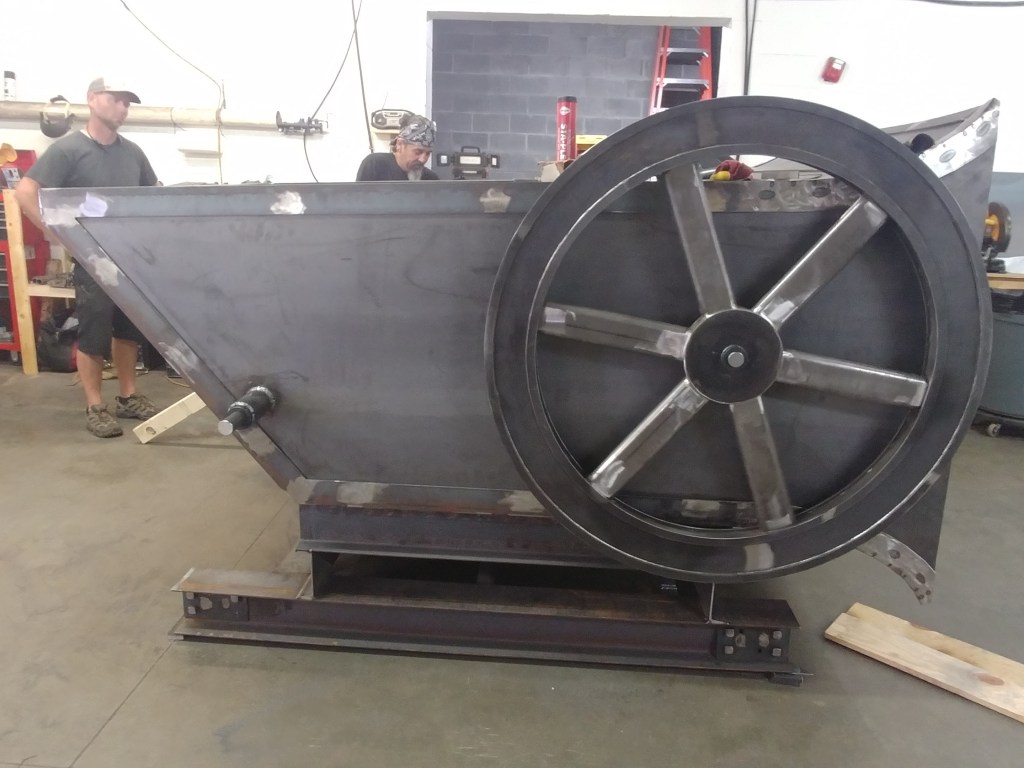
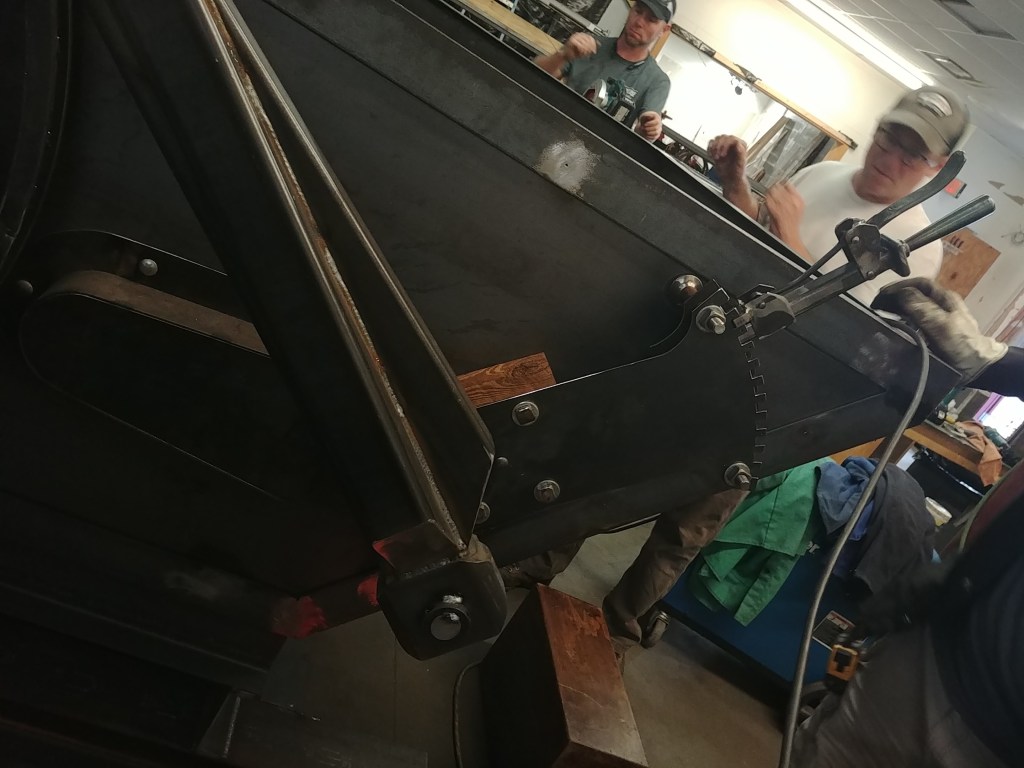
Our other big project was for the rock crusher scene. The rock crusher was about the size of a dumpster, with two giant steel drive wheels on either side and eccentric arms that went up and down. The whole thing was driven by a variable speed DC motor on a large flat belt. It was “blown up” with compressed air mortars, which were air tanks with red hat solenoids fitted to them. I built three of these, and Bruno had a big four-foot tank that we also used. The tanks had big steel funnels that we fitted and filled with bits of broken cork (poor Talis had to spend days breaking up sheets of cork), peat moss, and movie dust. When we applied 12v to the solenoid, the valve opened up and emptied the tank within seconds, emptying the funnels and simulating an explosion without the need for black powder or det(onation) chord. It usually gets a little sound effects to cement the illusion. Of course, there are no flames with this type of explosion, but it’s a lot less risky.

I also did several days of detail work on the rock crusher, but with the way it had to be positioned on the set, none of it was visible on camera.

The completed rock crusher headed to the set. It very nearly overloaded the forklift.

Adidas Commercial

Here are a few photos from a recent shoot for Adidas with Scratch Media, featuring tennis legend Stan Smith and PGA golfer Jessica Korda

Stan Smith and Jessica Korda, shooting at Sea Pines Resort in Hilton Head

Solo Cory Chambers Project

I’m working on a short EP length project for Cory Chambers of City Hotel. Nice to be doing some music work again.

Cory Chambers

A Tribute to Sarah Jones

A letter from Richard Jones

On February 20th, six years ago, my wife Elizabeth sat down in front of me and flatly said… “Sarah is dead.”

It is hard to fathom hearing and accepting such horrifying words. On this sixth anniversary of my daughter Sarah Jones’ passing, while I could talk about her life, I would rather talk about how much Sarah has accomplished since her death. I would rather share with you her legacy. 

Before doing so, Elizabeth and I wish to remember the other victims present six years ago on the set of Midnight Rider in Georgia, each with their own grief and journeys. Our thoughts and prayers continue to be with them. 

As for Sarah’s ongoing legacy, I still marvel at how a 27-year-old camera assistant could possibly change the culture of an entire industry.

Mike Miller, VP IATSE, said, “We need to remember Sarah Jones, and we need to know that she will always be protecting us from this point forward… This tragedy has brought together the filmmaking community in a way that I have never seen. Much of that is due to the person Sarah was… hardworking, fun, and a friend to very many people.”

Sarah’s epitaph reads: “TO HAVE KNOWN SARAH WAS A BLESSING. IT WAS TO FEEL AN ENERGY THAT WAS INFECTIOUS AND KIND.”

The Sarah Jones Film Foundation was created to help foster awareness and accountability around the message to NEVER FORGET, NEVER AGAIN. 

The SJFF conducts forward-thinking outreach through initiatives that include Safety Grants specifically designated to cover the costs of appropriate set safety on student films across the United States and Canada. Our goal is to change the culture of the film industry by teaching young filmmakers to treat set safety as a necessity, not a luxury.

Another initiative is naming the first shot of the day “The Jonesy Shot.” By calling out the Jonesy after each day’s safety meeting, crews can remember Sarah and affirm the vital importance of safety on set each and every moment of the day.

Also, the Sarah Jones Field Day is held every October in Atlanta to allow cast and crew members to gather and to once again encourage safe sets. In these and other ways detailed on our website (SafetyForSarah.org), the Sarah Jones Film Foundation raises awareness and fosters best practices around set safety, fueled by who Sarah Jones was… and continues to be. 

Richard Jones

Father of Sarah Jones

#safetyforsarah #slatesforsarah #wearesarahjones

Here’s what happens when you DON’T hire sound…

I stumbled across this video this morning in my news feed. My guess is that CNN didn’t think this story was important enough to send out a full crew, but just a shooter. You can’t hear the reporter-why? You can see the lav mic on the talent, but there’s nothing on the reporter. The result is all the questions are buried in the background sounds.

https://www.cnn.com/2020/01/07/tech/uber-hyundai-flying-taxis-trnd/index.html

This could’ve been because of a number of things, but a plausible explaination is their shooter’s camera kit only had a single lav and a camera mic, and they tried to get away with the camera mic on the reporter. The camera dept had their plate way too full with setting up two cameras (and since they were both locked down, the camera operator might have been the reporter.) Almost any decent soundperson would have prevented this from happening

This seems to be more and more the case, where production companies squeeze budgets tighter and tighter, and they think they can get away with not hiring a soundperson because “they’re too expensive.” Sometimes it works, but more often than not you get this kind of result. File this away under#hireasoundperson, #audiomatters, and #don’tcheapoutonyourcrew!

Splenda-Stevia campaign

Here’s some of the videos that I worked on this past spring for Humanaut. I am so lucky to be associated with these folks… they’re the best client that a sound mixer could ever wish for! I’m headed back to Chattanooga in a few weeks for yet another project, and I can’t wait to see what these folks have cooked up. Special thanks to my son Kyle Gilbert for his help on this project, he was boom op/audio utility, and a huge help. I’m definitely spoiled now & want him along on all my jobs (and I’m doubly proud that Humanaut specifically requested him for the next job!)


Heading to Chattanooga!

I’m about to embark on a road trip back to Chattanooga for a three-day commercial shoot and a recording session with Spinster, and a possible 2nd 3-day commercial shoot with another production company. Can’t wait to work with my peeps again!

Also on my to-do list is to pick up my Otari MTR10 tape recorder and bring it back to Savannah. I’d loaned it to Brett Nolan at The Soundry. While I don’t really have room for it here, I’m anxious to get it back so I can master some projects. There’s no emulation that can match the sound of real analog tape, and this was among the best machines ever built. The downside is the size… about the same as a large dorm fridge, and it weighs about 150 lbs, so moving it is a bit of a thing.

How I met Bootsy Collins!

So I’m here in Atlanta shooting DragonCon for Marvel, thanks to a referral from my good friend Grady Upchurch. Most all the costumes are over the top fantastic. We were down for a moment when he said, “that’s a pretty good Bootsy outfit… wait a minute, THAT’S HIM!” He was just walking the convention floor with all the other cosplayers, not attracting too much attention… he blended right in. A lot of the kids didn’t realize who he was… even our young PA Max said, “Who’s Bootsy Collins?”

0831181534

Me and Bootsy Collins at DragonCon in Atlanta.

Which reminds me of a related story I overheard at the African American History Museum in Washington DC. On the top floor, they have a reproduction of the Mothership (the original was destroyed) built by the same folks who made the original. A woman behind us said “That was the first concert I ever went to. I begged my Mama to let me go… I was only 15. She finally gave me permission. Well, when we got there, the place went dark, and this thing started floating down from the ceiling… and then all this weed came out. Then they (Parlament Funkadelic) came out on stage and played this song called ‘Light It Up,’ so we did. When my Mama picked us up, I didn’t stop talking the entire trip home. Mama said, ‘Honey, I think you got a contact buzz at that concert.’ “Oh really, Mama, what’s that?’ ‘That’s when you’re around a bunch of people smoking marajuana.’ ‘Really, Mama? What do they call it when you actually smoke it?’ She said to go lay down, Honey, and you’ll feel better in the morning.

I mentioned that story to Bootsey. He said, “Well, it sounds like she was really there!”

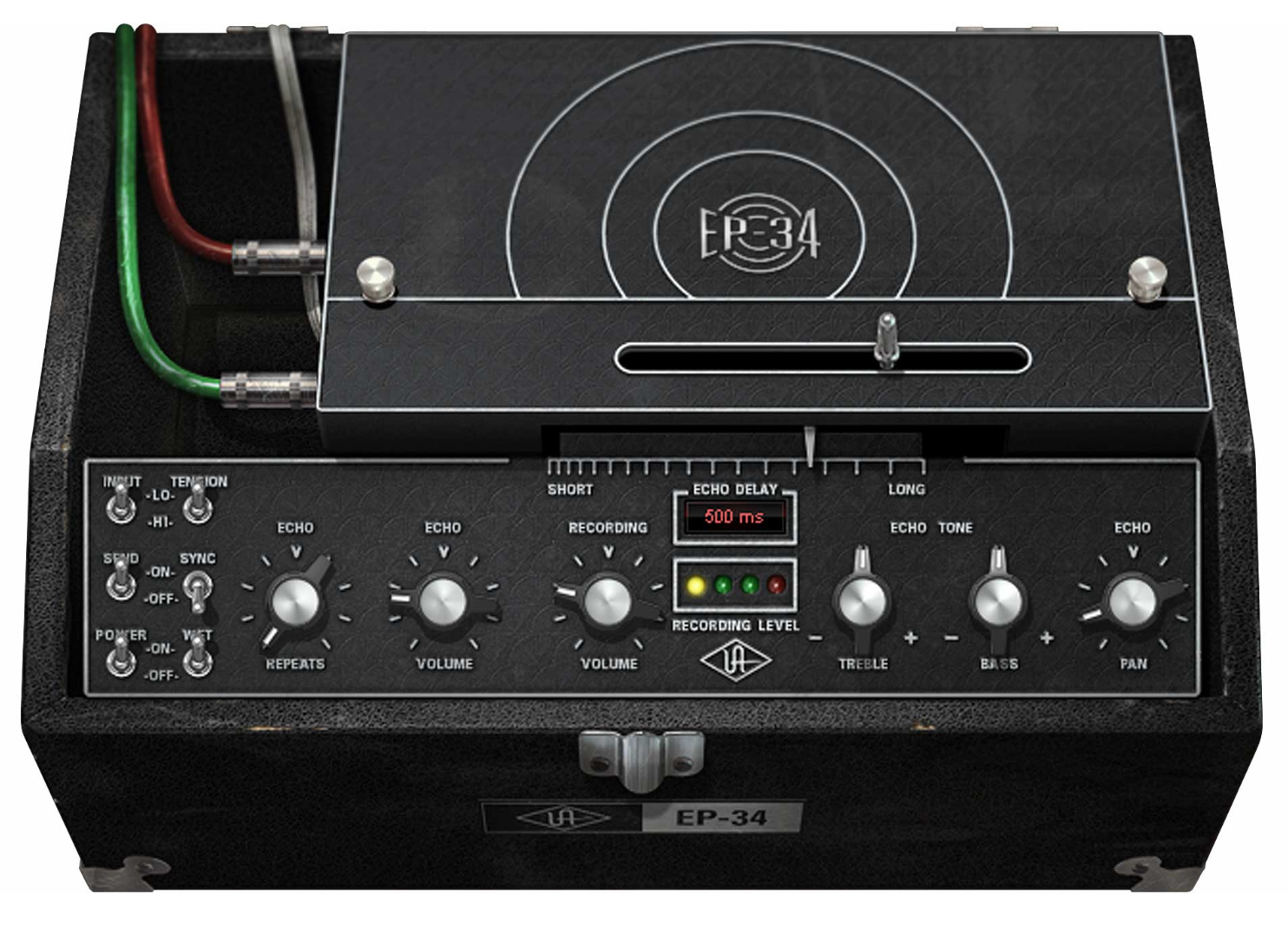
New equipment- the Universal Audio EP-34 Tape Delay

I’ve been looking at the prices of a real tape delay for a long time now. At the top of my list has been the Roland 501, which had balanced inputs and outputs… pretty essential for low-noise interfacing into an analog system. Unfortunately, the prices for these rarely dip below $1,500 for anything other than a total basket case, which for my situation is completely impractical.

The other option is a plugin emulation of a tape echo. Universal Audio has a couple options… the Echoplex EP-34 and the Galaxy tape echo, which is an emulation of the Roland 201. A recent mix was screaming for a good delay unit, so I went ahead and ordered the Echoplex.

Screen Shot 2018-06-19 at 9.30.14 PM

I know I’ve said it before, but I really like UA software products. They are not inexpensive, but every Universal Audio plugin that I’ve ever owned has survived three computer upgrades with no problems whatsoever.

Visually, the plugin looks just like an Echoplex, with a few additional controls- a panpot, and sync, tape tension, and wet toggles. A window that numerically displays the delay in ms was a luxury that engineers dreamed of back in the day, but nice addition for the software version.

I’d only used a real tape delay for a brief moment when I was much younger. I don’t remember much about it, except that it sounded REALLY cool. This plugin sounds about the same. I can’t speak to the accuracy of the emulation, but I can speak to the results. It’s a very nice addition for vocals if used sparingly. For mixing reggae, it’s essential… and should definitely be used un-sparingly.

I love it… a sample should be coming shortly.

Don’t Be A Yakoff for Humanaut Agency/Perception Kayaks

Here’s a short web piece that I worked on with boom op Will Taylor and A2 Kyle Gilbert. It made it to the Top 4 spot in the WeLoveAd weekly most viewed list.

Congrats to to Dan Jacobs, David Littlejohn, and Tommy Wilson, and thanks for using BGilbertSound!

Eddie Bush

Here’s a track from a former client, Eddie Bush.
Like Houdini Did by Eddie Bush“>

Delta Letters

Here’s a short film that I worked on for Delta/Smartypants:


IMG_3058

Savannah Bananas for MSNBC

Here’s a piece that I recently completed for MSNBC:

http://player.theplatform.com/p/7wvmTC/MSNBCEmbeddedOffSite?guid=n_yb_bananas_170806

New Controller for Mixbus, Take Two

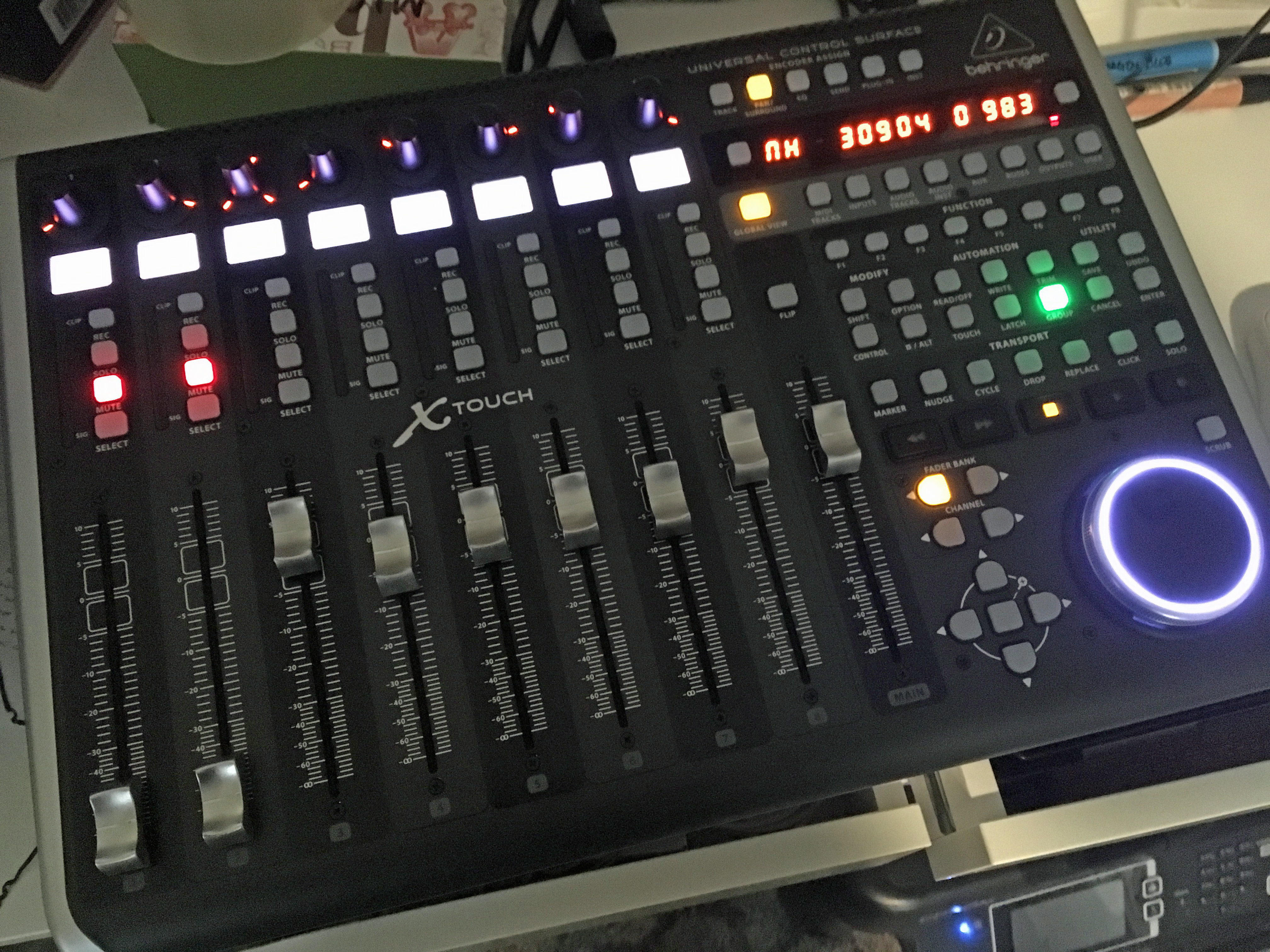
As I said in the previous post regarding the X-Touch Compact, my first attempt at controlling Mixbus with an external MIDI controller didn’t go so well. (In a nutshell, the XTouch Compact does work, but Mixbus has a lot of parameters to control, and the smaller control surface doesn’t have enough knobs for the jobs.) I went ahead and ordered the larger X-Touch and got a slightly used unit on eBay. The seller posted a photo of the very latest version (with colored buttons) but he shipped an earlier version. It wasn’t a huge deal… I actually prefer the earlier version, as all the pretty colors makes the latest X-Touch look kind of Fisher-Pricelike.

Behringer Xtouch

My new-to-me Behringer Xtouch controller running Mixbus. The earlier and less-colorful version looks slightly more upscale.

But the biggest question was, “will it work?” The short answer is- oh Hell yes. The darned thing works great straight out of the box. Kudos to Ben Loftis and the other folks on the Mixbus team for their programming efforts. Most of what you need to know about setting up and using this controller is covered in their videos. Their application of Mixbus to this particular controller is very intuitive, nearly all of the commands follow the printed legends on the controller, and you can get to just about every adjustment you’ll want to make via the controller. You’ll still need the keyboard and mouse to open files and name tracks- a laptop riser like this is on my radar, or perhaps a sliding tray shelf- but once I hit “play,” I rarely need to reach for the mouse.

While I’ve only been using this thing for a few days, I’m already hooked/spoiled. I can’t imagine running Mixbus without it. It makes adjusting parameters much faster, and I can concentrate more on the music and less on operating the program. The little rectangular “scribble strip” displays under the top rotary encoders are a huge help… the control surface can scroll through different sections of the program, and these displays tell me at a glance where I’m at and what each encoder does.

A big plus is the price point. I got mine for about $360. I’m sure an Avid S3 would be much cooler, but since- at least for me, and at least for now- music mixing is done more for fun that money these days, I’m like many musicians and am forced to keep costs under control.

I haven’t gotten the chance to see if this controller will work with any of my other programs, but that doesn’t really matter to me since Mixbus is where I need this most. I’ve wanted a controller that works with Mixbus since version 1.1, and finally I’ve got one that works well. And while I haven’t mixed on a real Harrison console for many years now, this will probably be as close as I’m ever going to get. Thanks, Harrison!

New Controller

I’ve just taken delivery of a new Behringer XTouch compact controller to help with the mixing duties on my DAW. I tried this some years ago with an early version of Mixbus, but I never could get the program and the computer to work together. I ended up selling the controller and resigned myself to mouse-mixing, which I don’t particularly love, but since I don’t have access to my analog mixing setup, it’s mouse-mixing or nothing. Then I stumbled upon this video that Harrison posted outlining the setup procedure for Mixbus 3.4 with this same controller. Looks like Harrison has done a lot of work to the program to make controller integration fairly easy. I haven’t set it up yet, so it remains to be seen if it actually works in real life as well as it does in the videos, but I’m fairly confident that it’ll work.

I bought the smaller “compact” version of the X touch, since space is somewhat at a premium and the additional controls found in the larger version are mainly transport functions. I don’t mind using the mouse and keyboard for that… it’s been forever since I used a jog and shuttle wheel to locate edit points, and a mouse feels faster and more accurate. But we’ll see- I can always sell this one and get the larger version if I feel I need more buttons.

I’ll add a more comprehensive post once I’ve used this setup for awhile, so stay tuned.

UPDATE… And as usual, I’ve learned that while this unit works, my choice wasn’t the best choice for Mixbus. It allows fader control, pan, mute/solo/record ready, and transport buttons, but no EQ control. The larger, more expensive X Touch is a far more capable unit, plus it has the added bonus of label displays for the rotary encoders, so you can tell exactly what you’re controlling- important because the unit has several layers, so depending ot the setting, the rotary encoders control pan, individual channel EQ, or individual channel compressor dynamics. So this unit is currently listed for sale on eBay, hopefully I won’t lose TOO much money on it.

xtouch.jpg

A new Behringer X-touch controller, just off the truck!

On Location 

Working in Chattanooga this week with Dan Jacobs and Humanaut on an Organic Valley campaign.

Music Engineering Reel: Spinster

Here are a few videos I worked on last fall for a band called Spinster. Three sisters, all classically trained, living in Chattanooga, Portland OR, and Costa Rica until recently. They’ve all relocated to Chattanooga to concentrate on the band for a year. I’m hoping that we can get some more songs recorded in the coming months.

We used several microphones that I built on this recording, and we used the Watts Polyribbon on vocals and upright bass. I was quite pleased with the way it turned out, though I could’ve gotten a little bit crazier if we’d done some overdubs and added a few more tracks. This performance was recorded with six tracks, straight to “tape” (straight to CF card, actually) using my Sound Devices 664 recorder. Minimal post processing,  it was mixed using Harrison Mixbus with Universal Audio’s EMT140 plate reverb and LA4a compressor plug-ins, though most of the reverb is coming from open mics in the burned-out house where we recorded. Noise reduction was provided by Izotope RX5 Pro processing suite.

 SWIM_BW.mov

 CALL ME_BW.mov

 MULE_BW.mov

Down To The Studs

I just learned that a pilot that I worked on is airing today at 2pm on HGTV. Here’s a preview:

https://www.facebook.com/plugins/video.php?href=https%3A%2F%2Fwww.facebook.com%2FCoolfireStudios%2Fvideos%2F10155382965433426%2F&show_text=0&width=560